
Drăghici promotes increased EU support for Moldova’s accession reforms
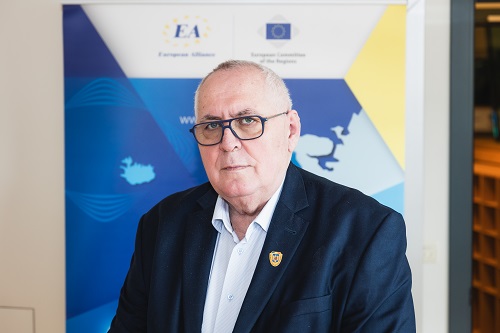
The final debate of the CoR’s 166th plenary session centred on Moldova’s accession process to the EU. Cristina Gherasimov, Deputy Prime Minister for European Integration of Moldova, presided over this debate as keynote speaker and highlighted the key role of local and regional authorities in facilitating Moldova’s European path. CoR members were therefore encouraged to engage in dialogue on the current state of Moldovan accession, with Emil Drăghici intervening on behalf of the EA Group.
Welcoming the creation of a Joint Consultative Committee between the CoR and Moldova, Ms. Gheramisov stressed the need for collaboration and exchange between LRAs across Moldova and the EU to facilitate Moldova’s smooth EU accession. She accordingly provided a detailed overview of Moldova’s public administration reform strategy, which aims to improve the country’s local governance structures and thereby facilitate increased cooperation with the EU’s local and regional governance networks. These reforms, which target public finance management, policy development, civil service organisation and public services, demonstrate commitment by Moldova’s national and local authorities to aligning with EU governance standards. She concludingly reminded attendees that engaging with Moldova’s reform efforts will help bolster EU’s long-term security and democratic stability. She thus encouraged sustained support for Moldova’s accession process to ensure that strong and lasting reform can be undertaken from the bottom up, ensuring no one is left behind in the path to EU accession.
Emil Drăghici commended the country’s clear commitment to European integration and urged the EU not to mistakenly delay Moldova’s accession, stressing that postponing progress would send a hostile message to citizens who chose the European path. Mr. Drăghici emphasised that Moldovan authorities are deeply engaged in aligning local governance with EU norms and constructing a crucial foundation for strong and lasting reform at the local level. He argued that these bottom-up efforts must be recognised and supported by the CoR. With this in mind, Mr. Drăghici reiterated the importance of cross-border partnerships in preparing Moldova’s local authorities for EU membership and called on EU institutions to act with urgency and confidence to facilitate the country’s swift accession. ‘Seize this moment and open wide the doors of our Union to Moldova’, he concluded.