
Scholzen and Maupertuis highlight housing challenges in rural and touristic territories
The CoR’s 166th plenary session featured a debate on the role of cities and regions in the EU Affordable Housing Plan, responding to a related COTER opinion. Keynoting this debate was Irene Tinagli, MEP and Chair of the European Parliament’s Special Committee on the EU Housing Crisis, who described the root causes of Europe’s housing crisis and outlined how it can be overcome.
Ms. Tinagli described Europe’s housing crisis as structurally intertwined with existing socio-economic inequalities and exacerbated by decades of under-investment and sell-off of public housing stock. The capacities of national and regional authorities to provide affordable housing have thus eroded, turning home ownership into an asset class. She stressed that the EU must take more responsibility for this crisis and that subsidiarity should no longer prevent EU legislation in this area. Truly tackling the housing crisis requires unlocking the EU’s financial and legislative tools so that local and regional authorities can be supported in providing affordable housing. She therefore called for adaptation of the EU’s regulatory framework and restructuring of the MFF so that more financial and policy support can be allocated to housing imperatives.
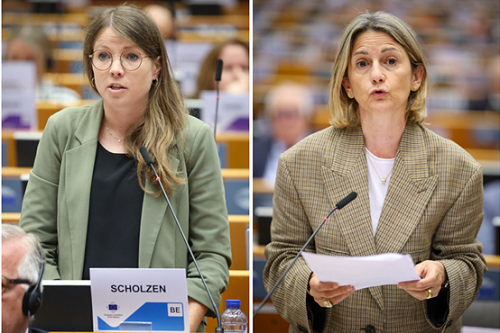
Liesa Scholzen responsed to Ms. Tinagli by highlighting that Europe’s housing crisis cannot be solved without addressing the specific challenges facing rural areas, where access to affordable housing remains a serious concern. Ms. Scholzen called for a housing policy that does not focus solely on the basic provision of homes but also on social integration and community-building. A truly effective housing policy should invest in the liveability of rural areas by ensuring access to key services like employment, childcare, education, healthcare and cultural life. She warned that failure to foster quality living environments in rural areas will increase rural-urban migration trends, thus intensifying housing pressures in cities and exacerbating the overall crisis. Ms. Scholzen ultimately called for stronger EU support within the subsidiarity framework, not simply to defend the “right to stay,” but to create the opportunity to stay.
President Maupertuis followed Ms. Scholzen’s intervention by praising the attention given to islands and touristic areas within the opinion that engendered this debate, for which she was a shadow rapporteur. Ms. Maupertuis stressed that local authorities must work closely with residents in touristic areas to ensure that affordable housing remains accessible amidst mounting market pressures. EU support and partnership must be given to local and regional authorities in these territories to ensure that they can fulfil the housing needs of their local communities without compromising subsidiarity and partnership principles.